
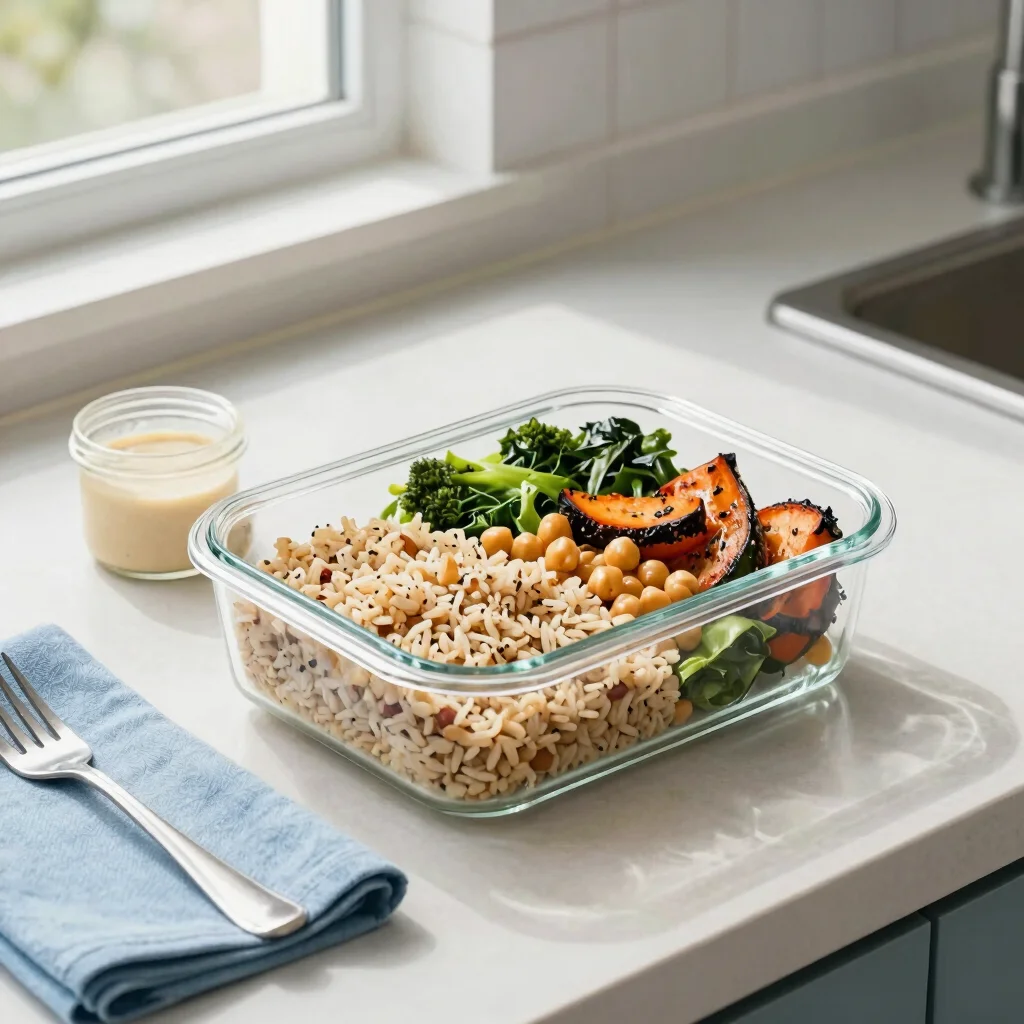
At noon, the difference between a satisfying lunch and a snack that leaves you searching the office kitchen an hour later can come down to what made it into the container. Instead of chasing a perfect meal, build lunch from a few practical parts: a source of protein, a fiber-rich food, and something you enjoy eating. The combination can be flexible enough for leftovers, a packed lunch, or a quick stop between errands.
Choose a Reliable Base
Start with foods that are easy to keep on hand, such as brown rice, whole-grain bread, beans, or leftover potatoes. Add vegetables or fruit for color and texture; frozen vegetables and prewashed greens can make this step simpler. The goal is not a specific formula, but a lunch with more than one kind of food doing useful work.
Add Protein and Flavor
Eggs, tofu, lentils, chicken, canned fish, and beans are all options, depending on your preferences and budget. A dressing, salsa, herbs, or a squeeze of lemon can make familiar ingredients feel less repetitive. If you pack lunch ahead, keep sauces separate when that helps preserve the texture.
Make It Fit Your Day
A lunch for a long shift may look different from one eaten between video calls, and appetite varies from person to person. Keep a few flexible staples around, then adjust the amount and mix to suit your schedule, preferences, and access to food. If you have a medical condition or specific nutrition needs, a registered dietitian or healthcare professional can help tailor general guidance to you.