 admin
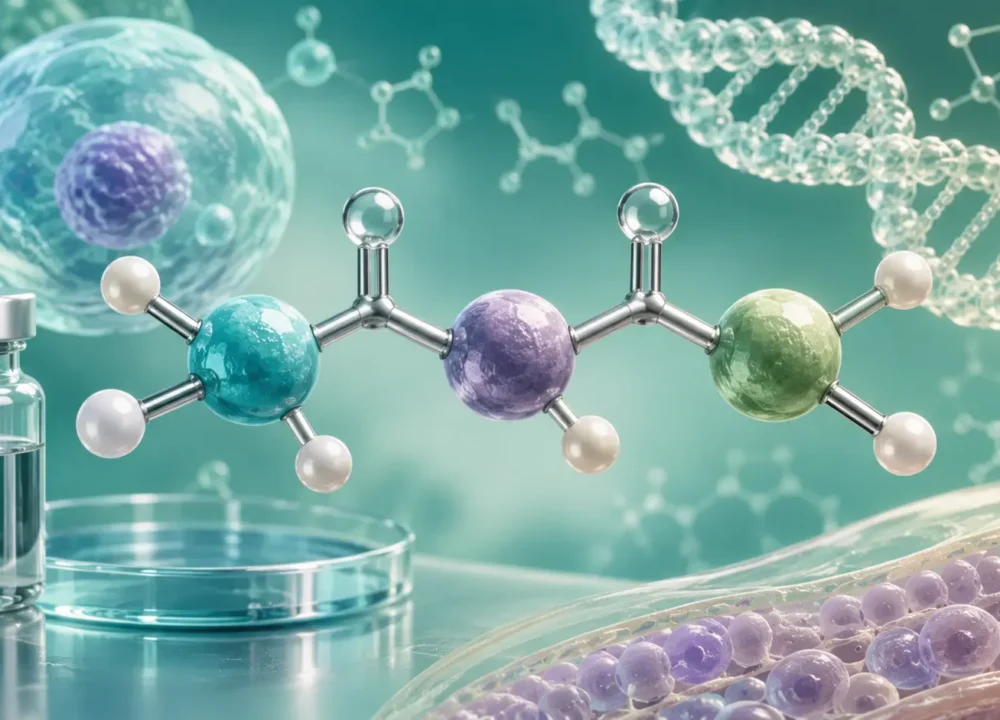
A tripeptide may be small in molecular size, but its role in biology and scientific research is worth understanding. These molecules consist of three amino acids connected through chemical bonds, forming structures that can participate in various biological processes. From antioxidant activity to collagen-related research, different tripeptides have attracted attention across medicine, biotechnology, nutrition, and skincare.
The term is also increasingly discussed in cosmetic science, particularly in connection with skin hydration, collagen research, and the development of advanced skincare ingredients. However, not every tripeptide performs the same function. Its activity depends on the specific amino acids, their sequence, and how the molecule interacts with biological systems.
Understanding what a tripeptide is, how it works, and where it is used helps separate established scientific information from marketing claims.
What Is a Tripeptide?
A tripeptide is a molecule formed when three amino acids join together through two peptide bonds. Amino acids are the basic building blocks used by living organisms to produce proteins and many other important biological molecules.
When three amino acids connect in a particular sequence, they create a tripeptide. Each amino acid contributes to the molecule’s chemical properties and potential biological activity.
For example, glycine, histidine, and lysine can combine to form a well-known tripeptide called GHK.
Another familiar example is glutathione, a naturally occurring tripeptide made from glutamate, cysteine, and glycine. It plays an important role in the body’s antioxidant defence system.
Although these molecules contain the same number of amino acids, their biological functions are different.
This demonstrates an important principle: the number of amino acids alone does not determine what a peptide does. Its sequence and chemical structure matter considerably.
Understanding Tripeptide Structure
The structure of a tripeptide is relatively simple compared with larger proteins, but its chemical arrangement is important.
Amino acids contain an amino group and a carboxyl group. During peptide bond formation, the carboxyl group of one amino acid reacts with the amino group of another, releasing a water molecule.
This process is known as a condensation reaction.
When three amino acids connect, two peptide bonds are formed.
How the Structure Works
A typical linear tripeptide contains:
- Three individual amino acid units.
- Two peptide bonds connecting those units.
- An amino-terminal end, commonly called the N-terminus.
- A carboxyl-terminal end, commonly called the C-terminus.
The order of amino acids creates the peptide’s primary structure.
For instance, changing the position of amino acids can produce a different molecule with different chemical characteristics.
This is particularly important in peptide research because even a small structural modification may influence stability, solubility, biological interactions, and activity.
Some peptides can also form cyclic structures, although many familiar tripeptides have a linear arrangement.
Different Types of Tripeptides
Tripeptides are not a single ingredient or substance. They represent a broad category of molecules with different structures and functions.
Several examples are particularly important in scientific research.
1. Glutathione
Glutathione is one of the best-known naturally occurring tripeptides.
It consists of glutamate, cysteine, and glycine. It is found in many cells and contributes to the body’s antioxidant defence mechanisms.
Its major functions include helping manage oxidative stress and supporting cellular redox balance.
Glutathione also participates in processes involved in detoxification and the maintenance of normal cellular function.
Its biological importance has made it a subject of extensive research in areas such as ageing, metabolism, and cellular health.
However, research findings about glutathione should not be interpreted as proof that every glutathione supplement produces specific health outcomes.
2. GHK Tripeptide
GHK is another widely discussed tripeptide.
Its name comes from its three amino acids:
- Glycine (G)
- Histidine (H)
- Lysine (K)
GHK has attracted interest in cosmetic and biological research because of its interactions with copper ions and its potential involvement in tissue-related processes.
The copper-bound form is commonly known as GHK-Cu.
Researchers have investigated GHK-Cu in connection with collagen-related activity, skin appearance, wound-healing mechanisms, and tissue biology.
It is important to distinguish laboratory findings from proven clinical benefits. Evidence from cell studies does not automatically establish that a product will produce the same effects in people.
3. Collagen Tripeptides
Collagen tripeptides are small peptide fragments produced through the breakdown of collagen.
Collagen is a structural protein found in connective tissues, including skin, bones, cartilage, and tendons.
Through processes such as enzymatic hydrolysis, larger collagen molecules can be broken into smaller peptide fragments.
Some collagen preparations contain specific tripeptide sequences, including glycine-proline-hydroxyproline (Gly-Pro-Hyp).
These ingredients are commonly studied in relation to skin hydration, elasticity, and collagen metabolism.
Their composition can vary depending on the original collagen source and manufacturing process.
Potential Benefits of Tripeptides
The potential benefits of a tripeptide depend on its individual structure and biological activity. Scientific research has identified several areas of interest.
Antioxidant Activity
Some tripeptides contribute to antioxidant defence.
Glutathione is a particularly important example because it helps cells manage reactive oxygen species and maintain a balanced internal environment.
Oxidative stress occurs when reactive molecules exceed the body’s ability to manage them effectively.
This imbalance is associated with several biological processes, making antioxidant systems an important subject of scientific investigation.
However, antioxidant activity in a laboratory does not automatically mean that a particular tripeptide can prevent or treat disease.
Skin Hydration and Appearance
Collagen-derived tripeptides have attracted attention in skincare and nutritional research.
Some clinical studies have investigated whether collagen tripeptide-containing products can influence skin hydration, elasticity, and visible wrinkles.
A 2021 randomized controlled trial examined collagen tripeptide supplementation and skin hydration in middle-aged women.
A separate 2022 pilot study investigated topical collagen tripeptide application in 22 women. Researchers reported improvements in several measured skin characteristics over four weeks.
These findings are interesting, but the studies have limitations, including sample size, formulation differences, and study duration.
More extensive research is needed to establish how consistently different tripeptide formulations affect skin health.
Collagen-Related Research
Certain tripeptides are studied for their potential interactions with biological pathways involved in collagen production and maintenance.
This is relevant because collagen contributes to the structure and strength of connective tissues.
As skin ages, changes in collagen organisation and production can contribute to wrinkles and reduced elasticity.
Researchers are therefore investigating whether particular peptide sequences can influence these processes.
The results depend on the specific peptide, delivery method, concentration, and biological environment.
Cellular Protection
Glutathione demonstrates how a small tripeptide can have an important cellular function.
It participates in antioxidant reactions and helps maintain the appropriate chemical balance inside cells.
Researchers also study its relationship with cellular stress responses and normal metabolic activity.
These functions explain why glutathione remains an important molecule in biochemical and medical research.
How Are Tripeptides Used in Skincare?
Tripeptides have become interesting ingredients in cosmetic science because some peptide sequences interact with biological processes associated with skin structure.
They may appear in different types of formulations, including:
- Facial serums.
- Moisturising creams.
- Anti-ageing skincare products.
- Eye creams.
- Specialised cosmetic formulations.
Different tripeptides are selected for different formulation purposes.
For example, GHK-related ingredients are studied for their potential interactions with skin biology, while collagen-derived peptides are investigated for their possible effects on skin appearance.
However, the presence of a tripeptide in a cosmetic product does not automatically establish its effectiveness.
The overall formulation matters. Ingredient concentration, stability, skin penetration, packaging, and compatibility with other ingredients can all influence product performance.
Consumers should also understand that cosmetic products are not interchangeable with medical treatments.
Tripeptides in Nutrition and Supplements
Certain tripeptides are also relevant to nutritional science.
Glutathione is naturally present in the body, while collagen-derived peptides are used in some nutritional supplements.
Collagen peptide products are often marketed for skin, joint, and connective tissue support.
However, the evidence varies according to the specific product and intended outcome.
A supplement containing collagen peptides is not necessarily equivalent to a purified tripeptide ingredient.
The peptide composition, source material, manufacturing method, and serving size can differ substantially between products.
Anyone considering supplementation should review the ingredient information and discuss potential interactions or health concerns with a qualified healthcare professional.
How Are Tripeptides Produced?
Tripeptides can be produced through several scientific and industrial methods.
The choice depends on the required amino acid sequence, purity, intended application, and manufacturing requirements.
Chemical Peptide Synthesis
Chemical synthesis is a widely used method for producing specific peptide sequences.
It allows researchers and manufacturers to connect selected amino acids in a controlled order.
One commonly used approach is solid-phase peptide synthesis (SPPS).
In this method, the growing peptide chain is attached to a solid support while amino acids are added through controlled chemical reactions.
Once the desired sequence is complete, the peptide is separated from the support and purified.
Enzymatic Hydrolysis
Enzymatic hydrolysis uses enzymes to break larger proteins into smaller peptide fragments.
This method is particularly relevant to collagen-derived ingredients.
By controlling the processing conditions, manufacturers can influence the size distribution and characteristics of the resulting peptide mixture.
However, hydrolysis does not always produce one specific tripeptide. The final composition may contain several different peptide sequences.
Laboratory Purification and Testing
Producing a tripeptide is only one part of the manufacturing process.
Quality assessment is also important.
Analytical techniques such as high-performance liquid chromatography (HPLC) and mass spectrometry can help evaluate peptide purity, identity, and molecular characteristics.
These methods are particularly useful when a specific peptide sequence is required for research or specialised applications.
Are Tripeptides Safe?
Safety depends on the individual tripeptide, its concentration, formulation, route of administration, and intended use.
A naturally occurring tripeptide should not automatically be considered safe in every possible application.
For example, a peptide used as a cosmetic ingredient may have a different safety profile from a concentrated research preparation or an experimental injectable formulation.
Potential considerations include:
- Ingredient purity and manufacturing quality.
- Contamination or incorrect product identification.
- Skin irritation or allergic reactions.
- Interactions with other ingredients.
- The suitability of the administration method.
Research-grade materials are not automatically approved for human consumption or medical use.
Products labelled for laboratory research should not be treated as medicines, supplements, or approved treatments.
For skincare products, consumers should follow the manufacturer’s directions and discontinue use if irritation or an unexpected reaction develops.
Anyone considering an injectable or experimental peptide should seek advice from a qualified medical professional rather than attempting self-administration.
Tripeptide vs. Dipeptide vs. Polypeptide
Peptides are often classified according to the number of amino acids they contain.
Understanding these differences makes scientific terminology easier to follow.
| Type | Structure |
|---|---|
| Dipeptide | Two amino acids joined by one peptide bond |
| Tripeptide | Three amino acids joined by two peptide bonds |
| Tetrapeptide | Four amino acids joined by three peptide bonds |
| Oligopeptide | A short chain containing several amino acids |
| Polypeptide | A longer chain of amino acids |
A tripeptide is therefore smaller than a typical polypeptide.
However, smaller does not necessarily mean more effective.
Different peptide structures perform different functions, and their biological activity depends on their chemical properties and interactions.
What Should You Consider When Choosing a Tripeptide Product?
If you are researching a tripeptide-based skincare product or supplement, looking beyond the product name is important.
Start by checking the complete ingredient list.
Identify the specific peptide rather than relying only on broad terms such as peptide complex or advanced peptide formula.
Next, consider the quality of the available scientific evidence.
Clinical studies involving the same ingredient and formulation are generally more useful than general claims about peptides.
For collagen-derived products, information about the collagen source, processing method, and peptide composition can also help.
Manufacturing transparency is another important consideration. Reliable product information should explain ingredient identity, quality testing, and intended use.
Finally, be cautious about claims that promise dramatic improvements or guaranteed medical results.
A scientifically interesting ingredient is not automatically a proven treatment.
Conclusion
A tripeptide is a small molecule made from three amino acids connected through peptide bonds, but its biological importance can be considerable.
Examples such as glutathione, GHK, and collagen-derived tripeptides demonstrate the variety of functions associated with these molecules.
Research continues to explore their roles in antioxidant defence, cellular biology, skin appearance, and collagen-related processes.
Although early findings and some clinical studies are encouraging, the evidence differs between individual tripeptides and applications.
Understanding the specific peptide, its composition, manufacturing quality, and available research is essential when evaluating a product or scientific claim.
As biotechnology and cosmetic science continue to develop, tripeptides will remain an interesting area of research, particularly where small molecular structures can interact with complex biological systems.

8. Frequently Asked Questions
1. What exactly is a tripeptide?
A tripeptide is a molecule made from three amino acids connected through two peptide bonds. Its properties depend on the amino acid sequence and chemical structure.
2. What are some examples of tripeptides?
Common examples include glutathione, GHK, and certain collagen-derived tripeptides such as Gly-Pro-Hyp.
3. What does a tripeptide do for the skin?
Certain tripeptides are investigated for their potential involvement in collagen-related activity, skin hydration, and elasticity. Their effectiveness depends on the specific ingredient and formulation.
4. Is a tripeptide the same as collagen?
No. Collagen is a large structural protein, while a tripeptide contains only three amino acids. Collagen can be broken down into smaller peptide fragments, including tripeptides.
5. Are tripeptides safe to use?
Safety depends on the individual peptide, formulation, concentration, and method of use. Research-grade peptides should not be assumed suitable for human use.