
 admin
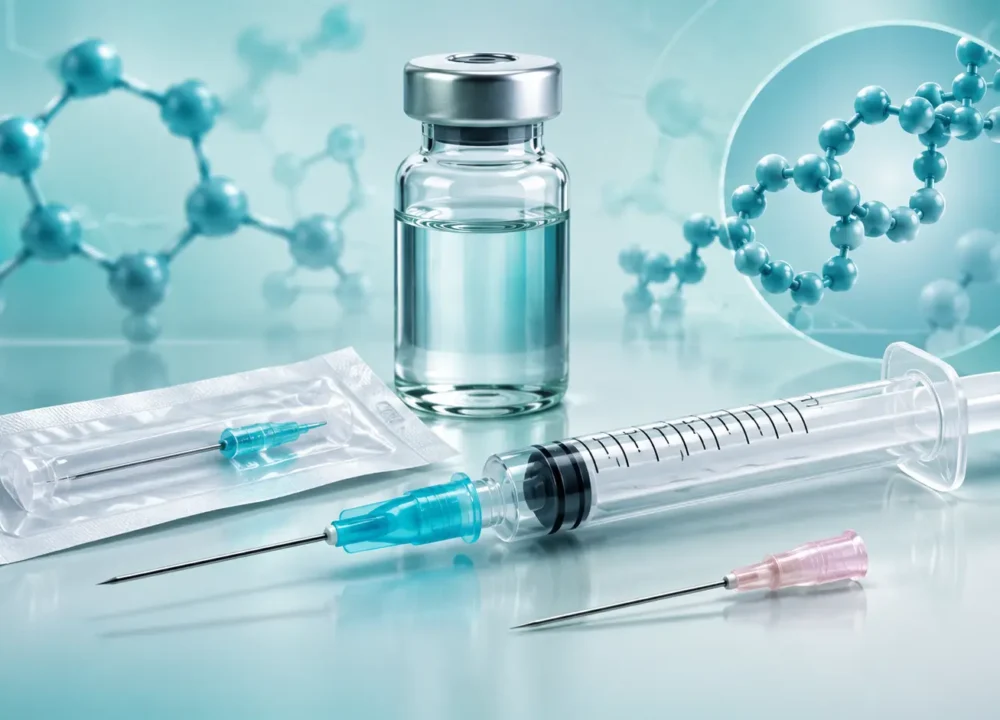
Injectable peptides have attracted considerable attention in medical research, healthcare discussions, and the wider wellness industry. As interest grows, more people are searching for information about peptide needles, including the types of syringes used, needle sizes, injection equipment, and important safety considerations.
However, choosing injection equipment is not simply a matter of purchasing the smallest available needle. Different injectable medicines have different administration requirements. The correct equipment depends on the prescribed product, its formulation, the intended injection route, and the manufacturer’s instructions.
Understanding these differences is particularly important because an unsuitable needle or incorrectly handled syringe can introduce unnecessary risks.
Whether someone is researching prescribed peptide medication or learning about injectable peptide products, understanding the equipment is an important starting point.
What Are Peptide Needles?
Peptide needles are needles used to administer injectable medications containing peptide-based active ingredients.
Peptides are short chains of amino acids. Some have established medical applications, while others are being investigated in scientific research. Insulin and certain GLP-1 medications are examples of medically established peptide-based treatments.
The needles used for these medicines are generally standard medical injection needles rather than a completely separate category of equipment.
Depending on the medication, administration may involve:
- A conventional syringe and disposable needle.
- A prefilled injection syringe.
- A medication-specific injection pen.
- Another manufacturer-approved delivery device.
The important distinction is that the delivery equipment must be suitable for the particular medication.
A syringe commonly used for one injectable medicine should not automatically be assumed suitable for another.
Different Types of Needles Used for Peptide Injections
Several types of injection equipment are available in healthcare settings. Their design and intended use vary according to the medication and administration method.
1. Insulin Syringes
Insulin syringes are designed for administering insulin and are commonly associated with subcutaneous medication delivery.
They usually feature a graduated barrel and an attached or compatible needle. Their markings are designed around insulin concentration, which makes understanding the measurement system particularly important.
Although insulin syringes are frequently discussed in online peptide communities, they are not universally appropriate for every peptide medication.
The syringe must be specifically compatible with the prescribed product and its dosing instructions. Confusing syringe markings with medication volume can lead to serious dosing errors.
2. Disposable Medical Syringes
Disposable syringes are widely used for administering different types of injectable medication.
They are available in different capacities and may accommodate different needle configurations.
Their suitability depends on several factors:
- The medication’s prescribed administration route.
- The required measurement accuracy.
- The product’s formulation.
- The compatible needle and delivery system.
A healthcare professional can determine whether a particular disposable syringe is appropriate.
3. Prefilled Injection Devices
Some peptide-based medicines are supplied in manufacturer-prepared injection devices.
These may include prefilled syringes and injection pens designed for specific medications.
One advantage is that the delivery system is developed around the medicine’s intended use. This can reduce certain preparation and measurement difficulties.
However, these devices are not interchangeable. Patients should follow the instructions supplied with their specific medication rather than attempting to modify the equipment.
4. Safety Needles
Safety needles include protective mechanisms designed to reduce accidental needlestick injuries.
Some feature shields or retractable mechanisms that cover or withdraw the needle after administration.
These devices are particularly relevant in healthcare environments where professionals regularly handle injection equipment.
Their protective features do not remove the need for proper handling and disposal.
Understanding Needle Gauge and Length
Needle measurements are among the most frequently discussed aspects of peptide injection equipment.
Two important measurements are gauge and length.
What Does Needle Gauge Mean?
Gauge describes the thickness or diameter of a needle.
An important detail is that a higher gauge number generally indicates a thinner needle, while a lower number indicates a thicker one.
For example, a needle with a higher gauge number is thinner than one with a lower gauge number.
However, thinner does not automatically mean more suitable.
Needle selection must consider the medication, delivery device, intended tissue, and manufacturer guidance.
Why Does Needle Length Matter?
Needle length affects how deeply the needle can reach into tissue.
Different injection routes require different tissue depths. For example, subcutaneous administration delivers medication into the fatty tissue beneath the skin, while intramuscular administration delivers it into muscle.
These routes are not interchangeable.
The appropriate needle length depends on the prescribed route, the person’s physical characteristics, and the instructions provided by the healthcare professional.
For this reason, choosing needle length based on general internet recommendations can be misleading.
Subcutaneous and Intramuscular Peptide Injections
Understanding injection routes is essential when researching peptide needles.
The two commonly discussed routes are subcutaneous and intramuscular administration.
Subcutaneous Injections
Subcutaneous injections deliver medication into the layer of fatty tissue beneath the skin.
Several established medicines are administered this way, including insulin and certain GLP-1 medications.
The subcutaneous route allows medication to be absorbed through the tissue into the bloodstream.
However, not every peptide is suitable for subcutaneous administration. The route must be supported by the medicine’s prescribing information.
Intramuscular Injections
Intramuscular injections deliver medication directly into muscle tissue.
This route has different equipment requirements and administration considerations.
The choice between subcutaneous and intramuscular administration depends on the specific medicine and its approved or prescribed use.
An injection should never be changed from one route to another simply because a different needle is available.
How to Choose Appropriate Peptide Injection Equipment
Choosing suitable equipment requires more attention than comparing prices or needle dimensions.
The following considerations can help explain what matters.
Check Medication Compatibility
Start with the medication’s official instructions.
The packaging, patient information leaflet, or prescribing documentation should identify the intended delivery method and any compatible equipment.
Some medications require dedicated injection devices. Others may be supplied in formats requiring specific syringes.
Consider Measurement Accuracy
Correct measurement is essential when administering injectable medication.
Different syringes use different measurement systems. Insulin syringe markings, for example, should not be confused with millilitres.
Using an incompatible syringe can create confusion and potentially lead to an incorrect dose.
Always follow the prescribed measurement instructions.
Look for Sterile, Individually Packaged Equipment
Sterility is a fundamental requirement for injection equipment.
Needles and syringes should be sterile, undamaged, and intended for single use.
Check the packaging before use. Do not use equipment if its sterile packaging is damaged, opened, or past its expiry date where an expiry date is provided.
Ask a Healthcare Professional
A pharmacist, prescriber, or appropriately trained healthcare professional can help identify compatible equipment.
This is particularly important when a medication is supplied in an unfamiliar format or when its administration instructions are unclear.
Important Safety Considerations When Using Peptide Needles
Injection safety deserves as much attention as equipment selection.
Even a suitable needle can become unsafe when it is handled incorrectly.
Never Reuse Needles or Syringes
Single-use means single-use.
A needle and syringe should not be reused, even by the same person.
After use, equipment may become contaminated with microorganisms or biological material. Reusing it can increase the risk of infection and tissue injury.
The Centers for Disease Control and Prevention (CDC) emphasises the principle of one needle, one syringe, only one time. CDC+1
Maintain Clean Handling Practices
Before preparing an injection, follow the hygiene instructions provided by the healthcare professional and medication manufacturer.
Important considerations include:
- Wash and dry your hands.
- Use sterile, unopened injection equipment.
- Keep the preparation area clean.
- Avoid touching sterile needle components.
- Follow the product’s instructions for handling medication containers.
These precautions help reduce contamination risks.
Understand Medication Storage
Not all peptide medications have identical storage requirements.
Some products require refrigeration, while others have different storage conditions.
Temperature, light exposure, handling, and product stability can affect medication quality.
Always follow the manufacturer’s storage instructions. Do not assume that all peptide products should be stored in the same way.
Dispose of Used Needles Properly
Used needles should be placed directly into an approved sharps container.
They should never be left on surfaces, placed loosely in household rubbish, or handled unnecessarily.
Do not bend, break, or recap used needles.
Safe disposal protects family members, healthcare workers, waste handlers, and other people who might encounter discarded equipment. Right Decisions+2
What Are the Risks of Using Poor-Quality Peptide Injection Equipment?
Poor-quality or inappropriate injection equipment can create several problems.
Infection: Non-sterile equipment or contaminated medication can introduce bacteria and other microorganisms.
Tissue irritation: Unsuitable equipment or incorrect administration can cause bruising, discomfort, or local irritation.
Needlestick injuries: Exposed needles create a risk of accidental punctures.
Dosing errors: Incompatible syringe markings or unclear measurement instructions can result in incorrect medication quantities.
Contamination: Improper handling of medication containers can compromise the contents, even when a new needle is used.
These risks demonstrate why product quality, equipment compatibility, and proper instruction matter.
Are All Injectable Peptides Approved for Human Use?
No. This is an important distinction that readers should understand before researching peptide needles.
Some peptide-based medicines have established medical uses and regulatory approval for specific conditions.
However, many products promoted online for muscle recovery, cosmetic purposes, anti-ageing, or general wellness have not undergone the same level of clinical evaluation.
For example, the US Food and Drug Administration (FDA) identifies safety concerns and insufficient human safety information for several substances commonly discussed in peptide communities, including BPC-157, KPV, and injectable GHK-Cu. FDA+1
These concerns include potential immune reactions, impurities, and limited evidence about safety.
Having access to sterile peptide needles does not make an unapproved or inadequately tested substance safe for injection.
In the UK, medicines without marketing authorisation may be supplied under specific regulatory arrangements for individual patients. This does not mean that every online peptide product is authorised or suitable for human use. GOV.UK
Readers should verify the status and intended use of a product rather than relying on marketing descriptions.
Where Can People Find Reliable Peptide Injection Supplies?
The source of injection equipment matters.
For prescribed medicines, pharmacies, licensed medical suppliers, and authorised healthcare providers are appropriate starting points.
When researching a supplier, consider the following:
- Whether the equipment is clearly identified by its manufacturer.
- Whether products are supplied in sterile packaging.
- Whether relevant specifications are available.
- Whether the equipment is compatible with the prescribed medicine.
- Whether the supplier operates through an appropriate regulatory framework.
For medicines purchased online in the UK, the MHRA provides a register that allows consumers to check authorised online medicine sellers. medicine-seller-register.mhra.gov.uk
Avoid relying solely on social media recommendations, anonymous reviews, or sellers making unsupported claims about their products.
A low price is not a substitute for reliable manufacturing and appropriate quality controls.
Frequently Overlooked Mistakes When Researching Peptide Needles
People researching injectable peptide equipment can sometimes focus too heavily on needle dimensions while overlooking other important factors.
Common mistakes include:
Assuming every peptide uses the same needle: Different medicines have different administration requirements.
Confusing syringe measurements: Not every syringe uses the same measurement scale.
Ignoring medication quality: Sterile equipment cannot compensate for contaminated or unsuitable medication.
Following unverified online instructions: Advice shared in forums may not apply to a particular medicine or individual.
Ignoring disposal: Improper disposal creates risks beyond the person receiving the injection.
Avoiding these mistakes begins with understanding the medication and obtaining appropriate professional guidance.
Conclusion: Making Informed Decisions About Peptide Needles
Peptide needles are an important part of discussions surrounding injectable peptide medications, but selecting appropriate equipment requires careful consideration.
Needle gauge, length, syringe compatibility, medication formulation, and injection route all influence whether a particular device is suitable.
Equally important are sterility, correct handling, reliable product sourcing, and responsible sharps disposal.
Not every peptide marketed online is approved for human use, and not every product has sufficient evidence to establish its safety. Injectable equipment should never be treated as proof that a substance is suitable for administration.
For anyone researching peptide needles, the most sensible approach is to prioritise medically appropriate products, follow manufacturer instructions, and consult a qualified healthcare professional before using injectable medication.
Understanding the equipment is useful, but understanding the medicine and its risks is what ultimately supports safer decisions.
8. Frequently Asked Questions
1. What are peptide needles used for?
Peptide needles are medical needles used to administer injectable peptide-based medications. The appropriate equipment depends on the medication, prescribed route, and delivery instructions.
2. Are insulin syringes suitable for all peptides?
No. Insulin syringes are designed for insulin administration. Their suitability for another medication depends on compatibility, measurement requirements, and professional guidance.
3. What is the difference between needle gauge and length?
Gauge describes needle thickness, while length describes how far the needle extends. Both measurements influence equipment suitability.
4. Can peptide needles be reused?
No. Needles and syringes should be used only once and disposed of appropriately to reduce contamination and infection risks.
5. Are all injectable peptides approved for human use?
No. Some peptide-based medicines have established medical uses, while others remain experimental or lack sufficient human safety evidence. Always verify a product’s regulatory status.