 admin
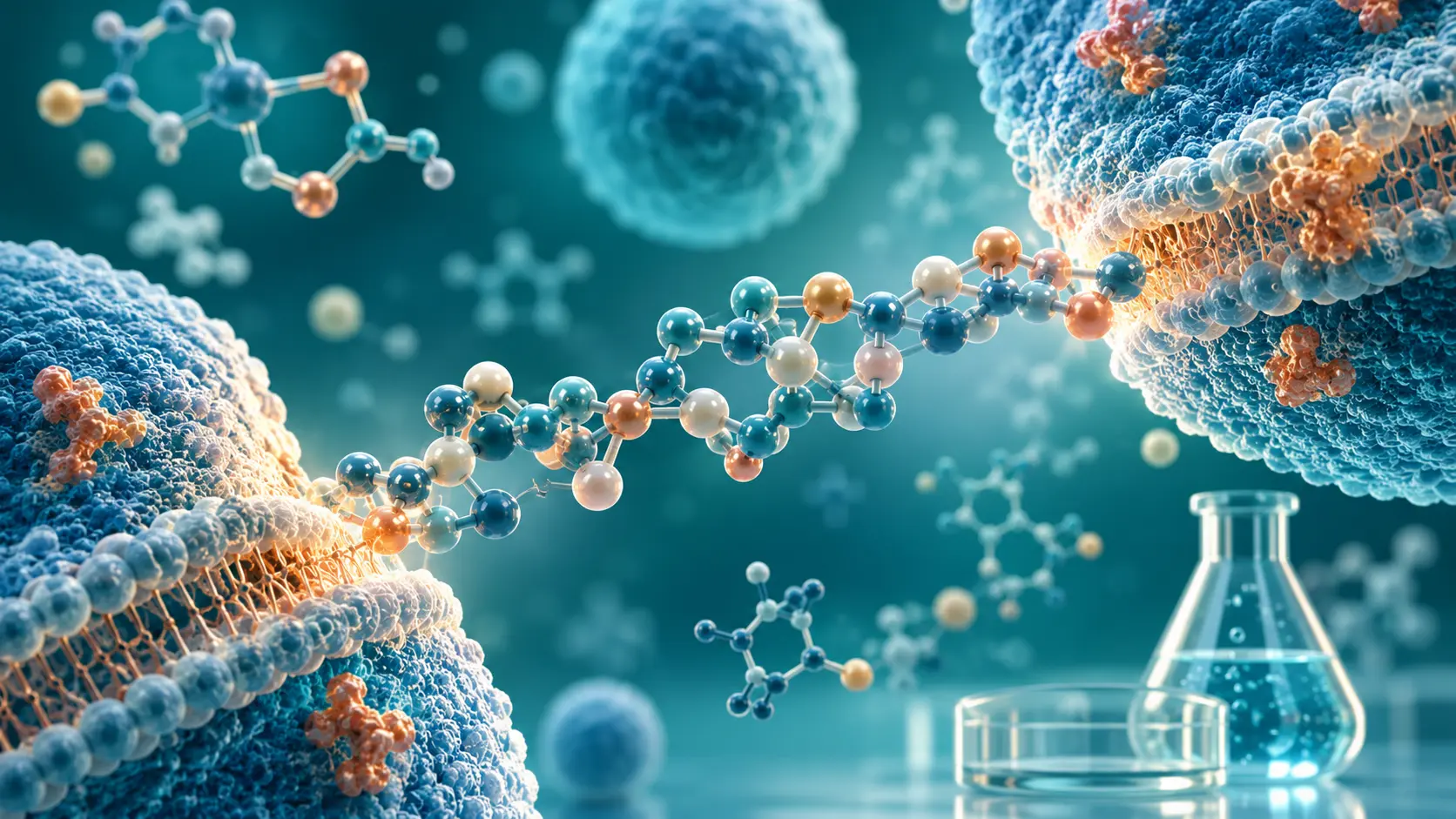
Peptides play an important role in many biological processes, from cellular communication to the movement of molecules across biological membranes. Among the different areas of peptide research, fusion peptides have attracted attention because of their involvement in membrane interactions, molecular engineering and emerging drug-delivery technologies.
The term can describe several related but distinct scientific concepts. In virology, a fusion peptide is a specific part of a viral protein that helps two membranes merge. In biotechnology, researchers also use the term when discussing engineered peptide combinations and peptide-based fusion systems designed to perform particular biological functions.
Understanding these differences is important when exploring the science behind fusion peptides. Their structures, mechanisms and potential applications offer valuable insights into how researchers are developing new approaches to biological research and therapeutic delivery.
What Are Fusion Peptides?
Fusion peptides are short chains of amino acids associated with the process of joining biological structures or combining different molecular functions.
The meaning depends on the scientific context. One of the best-established uses refers to membrane fusion peptides found in certain viral envelope proteins. These peptide regions help bring viral and cellular membranes together, allowing the contents of a virus to enter a host cell.
Another area involves engineered peptides that combine two or more functional sequences. Researchers may connect different peptide segments to create a molecule with specific properties, such as improved cellular uptake, targeting or biological activity.
These approaches share an interest in combining molecular functions, but they are not interchangeable.
A fusion peptide should also not automatically be confused with a fusion protein. Fusion proteins are larger engineered or naturally occurring molecules containing different protein components. Their structure can include peptide linkers and other functional regions.
The American Medical Association provides a formal description of fusion proteins, highlighting how separate functional components can be combined into one molecular structure. American Medical Association
How Do Fusion Peptides Work?
The mechanism depends on the type of peptide being studied.
1. Membrane Interaction and Fusion
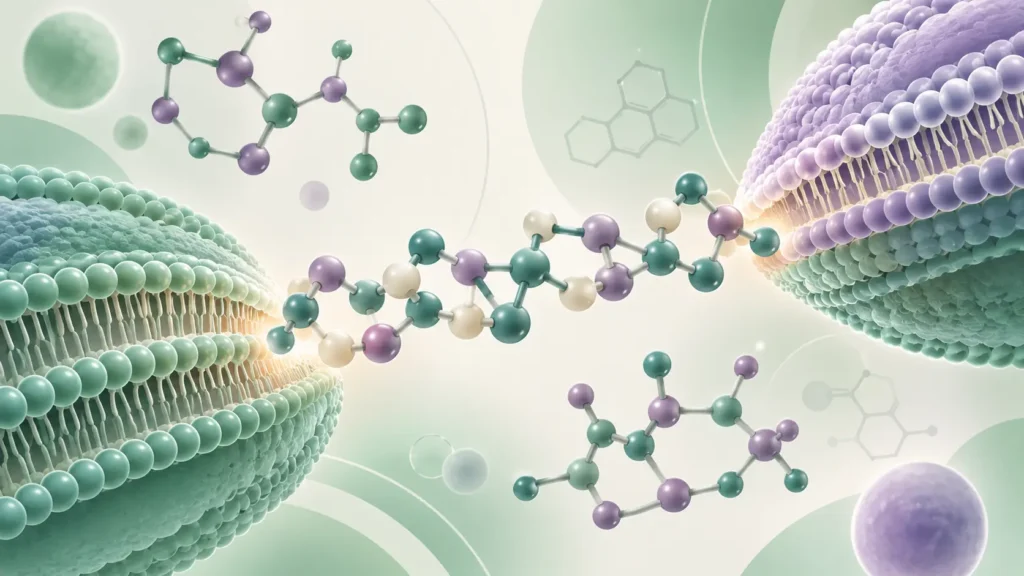
Some naturally occurring fusion peptides are part of proteins that help biological membranes merge.
This process is particularly important in viral infection. Certain viruses need to combine their outer membranes with the membranes of host cells before releasing their genetic material into the cell.
A fusion-related region of a viral envelope protein interacts with the target membrane. Structural changes in the surrounding protein help bring the two membranes closer together.
As the process continues, the membranes reorganise and eventually form a connection through which viral contents can enter the host cell.
The HIV-1 envelope protein provides a well-studied example. Its gp41 component contains a fusion peptide that inserts into the target-cell membrane and participates in the membrane-fusion process.
Researchers have investigated these molecular changes to understand viral entry and identify potential ways to prevent infection. PubMed+1
2. Combining Different Peptide Functions
Another approach involves joining peptide sequences with different biological properties.
For example, researchers may combine a cell-penetrating sequence with a functional peptide or protein component. The resulting construct is designed to help transport a particular molecule into cells.
The two components have different roles:
- One sequence may support interaction with cellular membranes.
- Another may provide the biological function researchers want to investigate.
- A connecting region may help maintain the structure or flexibility of the combined molecule.
This approach is relevant to biotechnology because many potentially useful biological molecules cannot easily cross cell membranes on their own.
Different Types of Fusion Peptides
Fusion peptides can be understood through several categories of research. These categories describe different scientific approaches rather than one standard classification system.
1. Viral Membrane Fusion Peptides
These are naturally occurring peptide regions within viral proteins.
Their primary biological role is to help viral and cellular membranes merge. They have been studied extensively in connection with viral entry mechanisms.
HIV, influenza and other enveloped viruses provide important research models for understanding membrane fusion.
Studying these structures helps scientists investigate how viruses interact with host cells and how specific molecular changes affect infection.
2. Cell-Penetrating Peptide Fusion Constructs
Cell-penetrating peptides, commonly known as CPPs, are short amino acid sequences investigated for their ability to help transport molecules into cells.
Some are naturally derived, while others are designed or modified in laboratories.
Researchers can attach these peptides to larger molecular cargoes through chemical conjugation or genetic fusion. The resulting constructs may help deliver proteins, nucleic acids and other substances into cells.
Examples of frequently studied cell-penetrating sequences include TAT-derived peptides, penetratin and polyarginine sequences.
However, successful cellular entry is not guaranteed. Different constructs behave differently depending on their structure, cargo and biological environment. PubMed+2
3. Synthetic Fusion Peptides
Synthetic fusion peptides are designed and produced for specific research purposes.
Scientists can modify amino acid sequences to investigate how changes in molecular structure affect properties such as membrane interaction, stability and biological activity.
These modifications may include changing the sequence, adjusting the length or connecting different functional regions.
Synthetic designs are useful because researchers can investigate individual structural features under controlled laboratory conditions.
However, a promising result in a laboratory experiment does not automatically establish that a peptide will work safely or effectively in humans.
4. Peptide-Protein Fusion Systems
Peptide-protein fusion systems combine a peptide sequence with a larger protein.
The purpose is to bring different functions together within one molecular construct. For example, a peptide component might support cellular delivery, while the attached protein provides the main biological activity.
Genetic fusion is one method used to produce these systems. Researchers combine the relevant genetic sequences so that the resulting biological expression system produces the connected molecule.
This technology has applications in experimental protein delivery, molecular biology and therapeutic development. ACS Publications+1
Potential Applications of Fusion Peptides
Fusion peptide research covers several areas of biotechnology and biomedical science.
Drug Delivery Research
One of the most interesting applications involves investigating how therapeutic molecules can enter cells.
Cell membranes naturally restrict the movement of many substances. This creates a challenge for researchers developing treatments involving proteins, nucleic acids and other large biological molecules.
Cell-penetrating peptide systems offer one possible approach.
By connecting a delivery-related peptide with a molecular cargo, scientists can study whether the combined construct improves cellular uptake.
Research in this area includes experimental approaches involving proteins, genetic material and potential therapeutic compounds.
However, researchers still need to address problems such as delivery efficiency, unwanted interactions and the distribution of molecules throughout the body.
Understanding Viral Infections
Membrane fusion peptides are important tools for investigating how enveloped viruses enter cells.
Understanding this process can help scientists identify molecular structures involved in viral infection.
The HIV gp41 protein is particularly important in this research.
Enfuvirtide, an approved HIV treatment, demonstrates how peptide-based research can contribute to medicine. It is a synthetic peptide that interferes with the gp41-mediated fusion process by preventing an essential structural interaction.
Importantly, enfuvirtide is a fusion inhibitor, not the natural fusion peptide itself. NCBI+1
Cancer Research
Some experimental studies investigate whether peptide-based delivery systems can transport therapeutic proteins or other molecules into cancer cells.
For example, researchers have explored the delivery of functional p53 protein using cell-penetrating peptide constructs.
The p53 protein is associated with important cellular processes, including the regulation of cell growth and responses to cellular damage.
These investigations provide useful examples of how engineered peptide systems might support targeted molecular research.
Nevertheless, laboratory and animal findings should not be interpreted as proof of an established cancer treatment. ACS Publications
Biotechnology and Molecular Engineering
Fusion peptides and related constructs are also valuable in biotechnology laboratories.
Researchers can use molecular engineering to combine different biological components and investigate how they behave together.
Potential research areas include:
- Protein engineering and modification.
- Cellular transport mechanisms.
- Molecular targeting.
- Biological imaging.
- Experimental therapeutic development.
- Protein stability and delivery systems.
These applications demonstrate the flexibility of peptide-based molecular design.
Advantages of Fusion Peptide Technology
Fusion peptide research offers several potential advantages.
Molecular flexibility: Peptides can be designed with different amino acid sequences and structural properties. This gives researchers considerable control over molecular design.
Multiple functions: Combining different peptide or protein components can create a construct with more than one intended function.
Research versatility: Fusion systems can be investigated in different experimental settings, including cellular studies, protein engineering and drug-delivery research.
Potential delivery improvements: Certain cell-penetrating sequences may improve the uptake of attached molecular cargoes under suitable experimental conditions.
Synthetic development: Many peptide sequences can be produced using established chemical synthesis techniques, allowing researchers to investigate different molecular designs.
These advantages make fusion-related peptide technology an interesting research area. However, each potential benefit depends on the specific molecular construct and its intended application.
Limitations and Research Challenges
Despite their potential, fusion peptides face several scientific challenges.
Cellular Delivery Is Not Always Efficient
A peptide that interacts with a cell membrane may not successfully transport its attached cargo into the required part of the cell.
Some molecules enter cells through endocytosis, a process in which cells take substances into membrane-bound compartments. The cargo may then become trapped rather than reaching its intended destination.
This remains an important challenge in cell-penetrating peptide research. PubMed Central (PMC)
Stability Problems
Peptides can be broken down by enzymes or interact with other biological molecules.
Their stability may change depending on their amino acid sequence, molecular structure and surrounding environment.
Researchers therefore investigate modifications that may improve stability without compromising the intended biological function.
Targeting and Specificity
A delivery system needs to reach the correct biological location.
Some cell-penetrating peptides can interact with different cell types rather than a single intended target. This may reduce delivery efficiency and increase unwanted biological effects.
Improving targeting remains an important part of ongoing research.
Safety and Biological Compatibility
A peptide that performs well in a laboratory experiment is not automatically suitable for human use.
Researchers need to investigate toxicity, immune responses, unwanted interactions and other safety considerations.
Long-term effects and performance in complex biological systems also require careful evaluation.
For these reasons, fusion peptide technology should be considered a developing research field rather than a universally established therapeutic solution.
What Does Recent Research Say About Fusion Peptides?
Research published in 2026 continues to explore the relationship between peptide structure, cellular delivery and therapeutic development.
A June 2026 review in ACS Chemical Neuroscience examined peptide-based delivery systems, particularly cell-penetrating peptides and their potential to transport molecules across biological barriers.
The review discussed the blood-brain barrier, an important protective interface that makes delivering many therapeutic substances to the central nervous system difficult.
It also examined peptide properties, cellular uptake mechanisms and the challenges involved in improving delivery efficiency. ACS Publications+1
Another 2026 review published in Organic & Biomolecular Chemistry explored emerging design strategies for cell-penetrating peptides.
The research considered how different cargoes, including proteins, nucleic acids and small molecules, influence delivery performance.
It highlighted an important principle: the effectiveness of a peptide delivery system depends on more than its amino acid sequence. Cargo characteristics, biological conditions and the design of the complete system also matter. Royal Society of Chemistry
These findings show why fusion peptide research remains relevant to modern molecular biology and pharmaceutical development.
Are Fusion Peptides the Same as Fusion Proteins?
No. Although the terms are related, they describe different molecular structures.
Fusion peptides generally refer to peptide sequences or engineered peptide combinations associated with particular biological functions.
Fusion proteins are larger molecules created by connecting two or more protein components. They may contain peptide sequences that provide linking, targeting or other functions.
For example, a fusion protein might combine a receptor-related component with another functional protein region.
The distinction matters because molecular size, structure, production methods and biological behaviour can differ considerably between the two.
Understanding the terminology helps readers interpret scientific publications and avoid treating different research technologies as identical.
What Is the Future of Fusion Peptide Research?
The future of fusion peptide research will likely involve more precise molecular engineering and improved delivery strategies.
Scientists are investigating ways to improve how peptide-based systems interact with biological membranes while reducing unwanted effects.
Potential developments include better targeting methods, improved molecular stability and more effective delivery of complex biological cargoes.
Research involving the blood-brain barrier is another important area because many neurological treatments face difficulties reaching their intended destination.
However, significant work remains before many experimental delivery systems can become established clinical technologies.
Future progress will depend on reproducible laboratory findings, carefully designed animal studies where appropriate, and well-controlled human clinical trials.
Researchers will also need to establish reliable manufacturing standards and demonstrate that engineered peptide systems perform consistently.
Conclusion
Fusion peptides represent an interesting and technically diverse area of modern biotechnology. From naturally occurring viral membrane fusion sequences to engineered peptide-protein delivery systems, these molecules help researchers investigate how biological structures interact and how different molecular functions can be combined.
Their potential applications include drug-delivery research, viral infection studies, cancer research and protein engineering. At the same time, challenges involving cellular uptake, stability, targeting and safety remain important.
Understanding fusion peptides requires looking beyond the name and examining the specific molecular structure and mechanism involved.
As research advances, these technologies may contribute to new approaches in molecular biology and therapeutic development. For now, their value lies in the scientific opportunities they offer and the important questions researchers continue to investigate.
8. Frequently Asked Questions
1. What are fusion peptides?
Fusion peptides are amino acid sequences or engineered peptide constructs associated with membrane fusion or the combination of different molecular functions. Their exact meaning depends on the scientific context.
2. What are fusion peptides used for?
They are investigated in drug-delivery research, viral membrane studies, protein engineering, cancer research and biotechnology.
3. How do fusion peptides interact with cell membranes?
Certain fusion peptides interact with cellular membranes and help bring membranes together. Cell-penetrating peptide constructs use different mechanisms to support the movement of attached molecules into cells.
4. Are fusion peptides the same as fusion proteins?
No. Fusion peptides generally involve shorter amino acid sequences or engineered peptide combinations, whereas fusion proteins combine larger protein components into one molecular structure.
5. Are fusion peptides approved for medical use?
Fusion peptides are not one specific medication or product category. Some peptide-based medicines, such as enfuvirtide, are approved for particular medical uses. Many other fusion-related peptide technologies remain experimental.